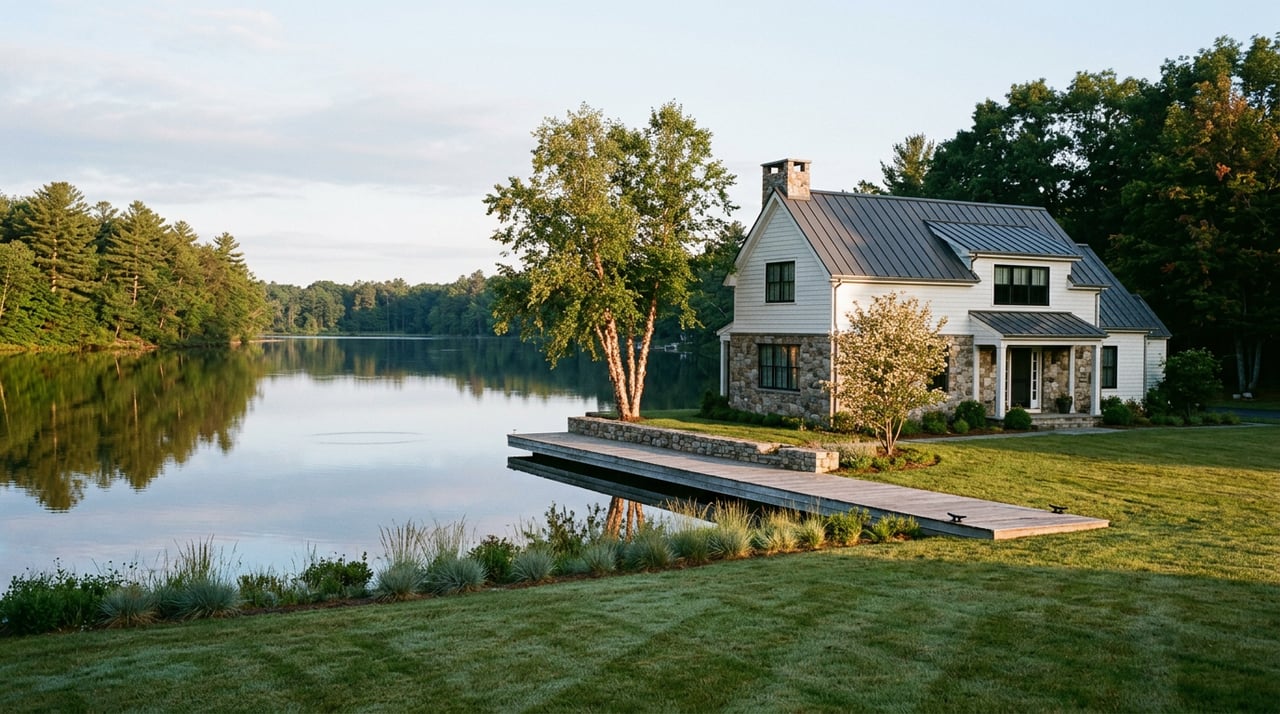
A buyer photographs the dock at a showing. It sits low over the water, weathered gray, tied off with a coil of rope that looks like it has been there since the Ford administration. The listing says waterfront. The buyer assumes the dock transfers with the deed the same way the roof does.
It doesn't always work that way here.
In the Village of Greenwood Lake, a dock that extends into or over the water requires its own building permit, separate from the one that covers the house. If more than half of an existing dock needs to be rebuilt, the village treats the repair as new construction and restarts the same approval process, which also has to clear New York State Department of Environmental Conservation and Army Corps of Engineers requirements before a permit is issued. The dock in the listing photo might be grandfathered. It might also be the next owner's paperwork problem.
That single rule is the clearest evidence of something buyers scrolling listings for Greenwood Lake tend to miss: the word "waterfront" is doing the work of two very different products, and knowing which one you're looking at matters more than the number on the listing page.
Two Products Wearing One Word
Most homes marketed as being "on" Greenwood Lake fall into one of two categories, and they are not interchangeable.
The first is deeded lake rights through a private association. Indian Park is the clearest example. Founded in 1936 in the Town of Warwick, the community grew from its original cottages to about 280 homes today, most converted to year-round living. Owners here don't each hold a private slice of shoreline. Instead, the association holds two deeded lakefront areas, one built around swimming with a clubhouse and shared docks, and access runs through membership in good standing rather than through your individual property line. Boat storage on the association beach runs seasonally, from May 1 through October 31, on a first-come basis limited to owners current on their dues.
The second product is true lakefront: a parcel where the property line runs to the water and any dock belongs to that specific lot, not to a shared association area. This is the category where the village's permitting rules apply directly to the individual owner, not to an association managing a shared structure on behalf of 280 households.
Both get called waterfront in casual conversation. Only one comes with water rights that live inside your own deed rather than inside a membership agreement.
What the Median Price Is Actually Hiding
Across all of Greenwood Lake, the median sale price over the twelve months ending in early September 2026 sat at $410,000, down 4% from the prior twelve-month period. Waterfront-specific listings during that same window carried a median asking price of $544,000, with eight such homes on the market as of early September 2026.
That gap, roughly a third higher for waterfront over the town-wide median, looks like a simple premium for proximity to water. It isn't quite that. Some of the inventory sitting inside that $410,000 town-wide median includes homes with deeded lake rights through an association like Indian Park: full lake access, a clubhouse, a beach, but not a private dock tied to the lot. Some of the inventory inside the $544,000 waterfront median is true private frontage, where the dock and the permitting obligation that comes with it belong to the buyer alone.
In other words, the premium isn't just paying for being near the water. It's paying for which of the two ownership systems you're buying into, and whether the rights you're getting sit inside a shared association structure or inside your own property line.
| What You're Actually Buying | A Local Example | How Lake Access Is Paid For | What It Takes to Add or Repair a Dock |
|---|---|---|---|
| Deeded lake rights through an association | Indian Park Association, about 280 homes, Town of Warwick | Annual dues covering the association's beach and clubhouse | Shared docks managed by the association, not an individual permit |
| True private lakefront | Homes with their own frontage and bulkhead | No HOA requirement tied to lake access | A Village building permit, plus DEC and Army Corps compliance |
The Permit Nobody Mentions at the Open House
The Village of Greenwood Lake's zoning code is specific about docks in a way that most listing descriptions are not. Under the village's code, a dock that extends into or over the water needs a building permit before it goes in, and that permit can't be issued unless the plan also satisfies state DEC rules and Army Corps of Engineers requirements. Rebuilding more than half of an existing structure resets the clock and triggers the same approval process as building new. The code also sets a physical boundary between neighbors on the water: no boat can be moored within one foot of an adjoining lakefront property line.
None of this is unusual for a regulated recreational lake. It just means that a dock visible in a listing photo is not automatically a transferable amenity in the way a finished basement is. Before writing an offer on a property marketed with private frontage, it's worth asking the listing agent directly whether the current dock has an active permit on file with the village, and whether any of it has been rebuilt recently enough to have triggered that fifty percent threshold.
The Water Itself Is Part of the Diligence
Greenwood Lake straddles the New York and New Jersey border, and a bi-state Greenwood Lake Commission, formed in 2001, exists specifically to manage the lake's water quality across that line. The commission stays active on this front. In June 2026, it hosted a public presentation on a year-long scientific study into the nutrient conditions behind harmful algal blooms, led by a researcher from Montclair State University.
That's not a red flag. It's a sign that the lake has an organized, ongoing management structure watching conditions that affect swimming, boating, and property values for everyone with lake rights, deeded or private. Buyers comparing homes here are wise to understand that this is an actively monitored body of water with a formal bi-state process behind it, not an unmanaged pond that happens to have houses around it.
What to Ask Before You Write an Offer
If a listing describes a home as being on Greenwood Lake, a few direct questions separate a clear picture from an assumption:
- Is lake access deeded to this specific parcel, or does it run through membership in an association like Indian Park or a similar community?
- If there's a private dock, is there an active village permit on file, and has more than half of it been rebuilt in recent years?
- What are the annual dues or assessments tied to lake access, and what do they cover beyond the beach and clubhouse?
- Is the home inside the village's jurisdiction for permitting purposes, and has any recent dock work already gone through DEC or Army Corps review?
These aren't questions a portal listing answers. They're the kind of thing that surfaces once someone is actually walking the property line with you.
The Takeaway
The real distinction on Greenwood Lake isn't waterfront versus not waterfront. It's whether you're buying deeded rights that live inside a shared association structure, or private frontage where the dock, the permit, and the responsibility all belong to you alone. The median price tells you what the lake costs on average. It doesn't tell you which of two very different ownership experiences you're stepping into, and that's the detail worth resolving before you fall for the photo of the dock.
If you're comparing Greenwood Lake listings and want a clear read on which product a specific address actually is, Rebecca A Bank can walk the permitting history and association details with you before you write an offer. Schedule a Consultation to get a straight answer before the dock in the listing photo becomes your problem to solve.